Stoke Space Started Tracking Hardware in R&D. Here’s Why You Should Too.
In September 2023, workers at Boeing’s Renton factory removed a door plug from a 737 MAX 9 to repair some rivets. No one recorded that it had been removed, so it wasn’t inspected when it went back on, and the plane left the factory missing four bolts. In January 2024, the door plug blew out over Portland on Alaska Airlines Flight 1282. The NTSB traced the failure to Boeing’s process for documenting part removals, which workers followed inconsistently.
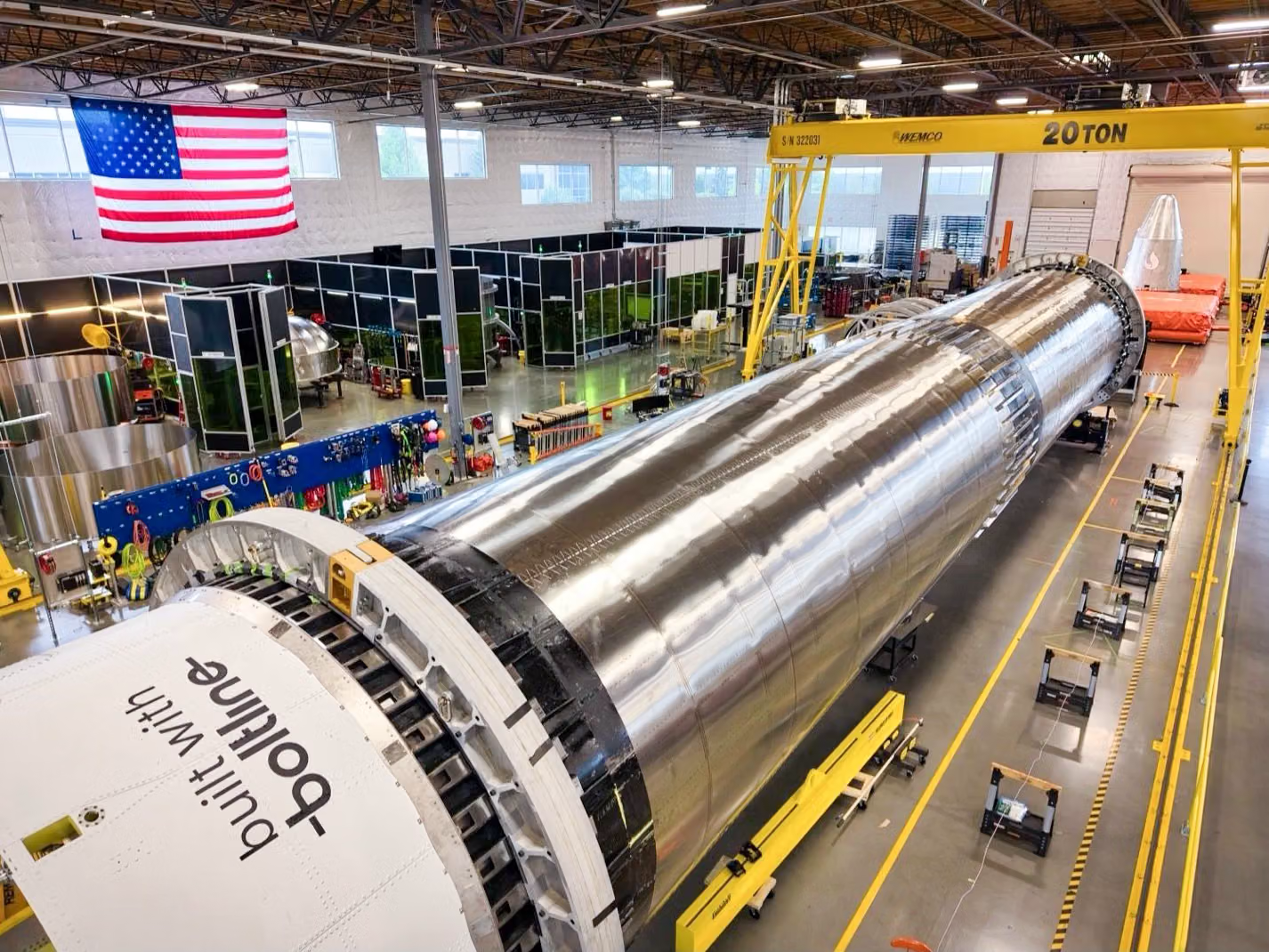
Every hardware team runs into unknowns. Whether a team can find the answers depends on habits formed long before anything goes wrong. Stoke Space, the launch company building Nova, a fully reusable rocket, runs many stable processes today, but that wasn’t always the case. Even at scale, complex hardware keeps bringing new surprises. A world of changes, precision, and rapid production is where Boltline, the software platform Stoke built on its own factory floor, shines. It was born in R&D, where everything is uncharted, and built for teams running that work alongside production.
However, for most teams still in R&D, not having all the answers doesn’t feel like a crisis, and keeping a formal build record isn’t a priority. “Your startup founder isn’t going to make a work order to put together their first prototype,” said Andy Lapsa, CEO and co-founder of Stoke Space. In early development, there are no instructions yet. Teams are figuring out how to build something for the first time, and the process changes with every attempt.
Why the Record Must Start on Day One
R&D teams stay on spreadsheets because the tools built to capture a manufacturing record assume a stable process. “A traditional manufacturing execution system (MES) only operates at the time of production,” said Brent Bradbury, general manager of Boltline. “When you’re in R&D, everything is one-off and constantly changing. Companies don’t pay that configuration cost because they’re doing one-offs every single time. They just stay on Excel.”
This works while teams are small enough to be the system. But when the build count goes from one to ten and headcount doubles, what’s left is a mix of Excel, Word documents, Jira tickets, and email. Tools are disconnected, and tracing a part means piecing together files by hand.
On a Parallel Path with a Rocket Factory
Stoke confronted this challenge on day one. “We knew that designing, building, and testing with both rapid cadence and iteration was paramount to our progress,” Lapsa said. No tool on the market could keep pace while still producing the record flight hardware demands.
The result was Boltline, an execution engine for hardware traceability that’s now commercially available to any hardware team. Teams get the same system Stoke uses to build flight hardware, without spending years building their own. The tool was built on the belief that traceability fails the moment it becomes a separate task. “If it’s an extra step for the technician to put that data in, it will not get used,” Lapsa said. In order to succeed, the tool has to remove friction and make the technician’s job easier.
In practice, work plans, inventory, and builds link automatically from the first prototype. The platform returns the procedure a part was built to, the lot each of its components came from, and every other build that used them, all from a single serial number. Existing procedures in PDFs go through AI import and come out as digital work instructions in seconds.
The record is what stands between working hardware and a license to fly in this industry. “I’ve seen it take multiple years of reverse engineering and reverse-filling-in paperwork to get from something demonstrated as working to something that has an FAA license,” Lapsa said. “The paperwork should just take care of itself if it’s actually built correctly.”
Choosing When to Start
The need for this level of traceability arrives earlier than expected. The teams that build the habit on the first prototype don’t have to go back and reconstruct the record.
The case for starting early is the case for de-risking the whole program. “What a smart leader wants is the ability to iterate quickly and rapidly toward working hardware. Build something, try it, make it better, eventually it’s good enough,” said Bradbury. “And then once you know how to make the parts, do it again predictably. Iterate fast in R&D, then repeat the process reliably.”
Boltline was built alongside Stoke’s rocket factory, so the work plans, inventory, and build records were in place from the first prototype. “We skipped production hell because we built our factory and its administration together with the end item we are delivering,” Bradbury said. “So when we go to build the next one, we’re ready to hit the ground running.” The record keeps growing from there. Prototype work plans become production procedures, and each part’s build history follows it into service, where it’s the first thing a team checks when something needs repair or replacement. For reusable hardware like Stoke’s Nova systems, every flight adds to a record that started on day one.
R&D teams are already iterating fast, but repeating the process reliably depends on a record that was kept from the first build. Boltline was built for day-one traceability, and it scales with the work. Customers who started on Boltline in R&D have since moved into production on the same platform, and teams already in production use it to bring order to processes that outgrew their spreadsheets or never fit their legacy MES. Boltline is a line-for-line fit for teams on any complex hardware mission, whatever stage they’re in.
To learn more about Boltline, explore boltline.com and see it in action with a demo.